Formula Student teams design, build, and race single-seater formula-style cars — and the electrical subsystem is where the competition rules are strictest. Safety-critical systems like the shutdown circuit and tractive-system interlocks must work flawlessly, while sensors, telemetry, and the battery pack all have to integrate into one reliable vehicle.
What I built
As Systems Lead, I own the interfaces between four specialist teams (Accumulator, Electrical Safety, Drivetrain, and Vehicle Controls) rather than any single specialist team: the master electrical architecture, the safety-critical documentation submitted to competition organizers, the build schedule, and the sign-off process that ensures every hardware boundary between teams is deliberately designed rather than discovered during integration. The role sits at the intersection of electrical engineering, systems thinking, and project delivery — translating a 130-page competition safety standard into a build plan for a twelve-person team with no prior high-voltage experience, working around real constraints in parts sourcing, safety certification, and logistics that most teams in this competition never face.
Shutdown circuit schematic
Shutdown circuit — safety interlock chain.
Harness diagram / photo
Low-voltage wiring harness and sensor placement.
BMS design / accumulator photo
Accumulator & BMS — cell monitoring and protection.
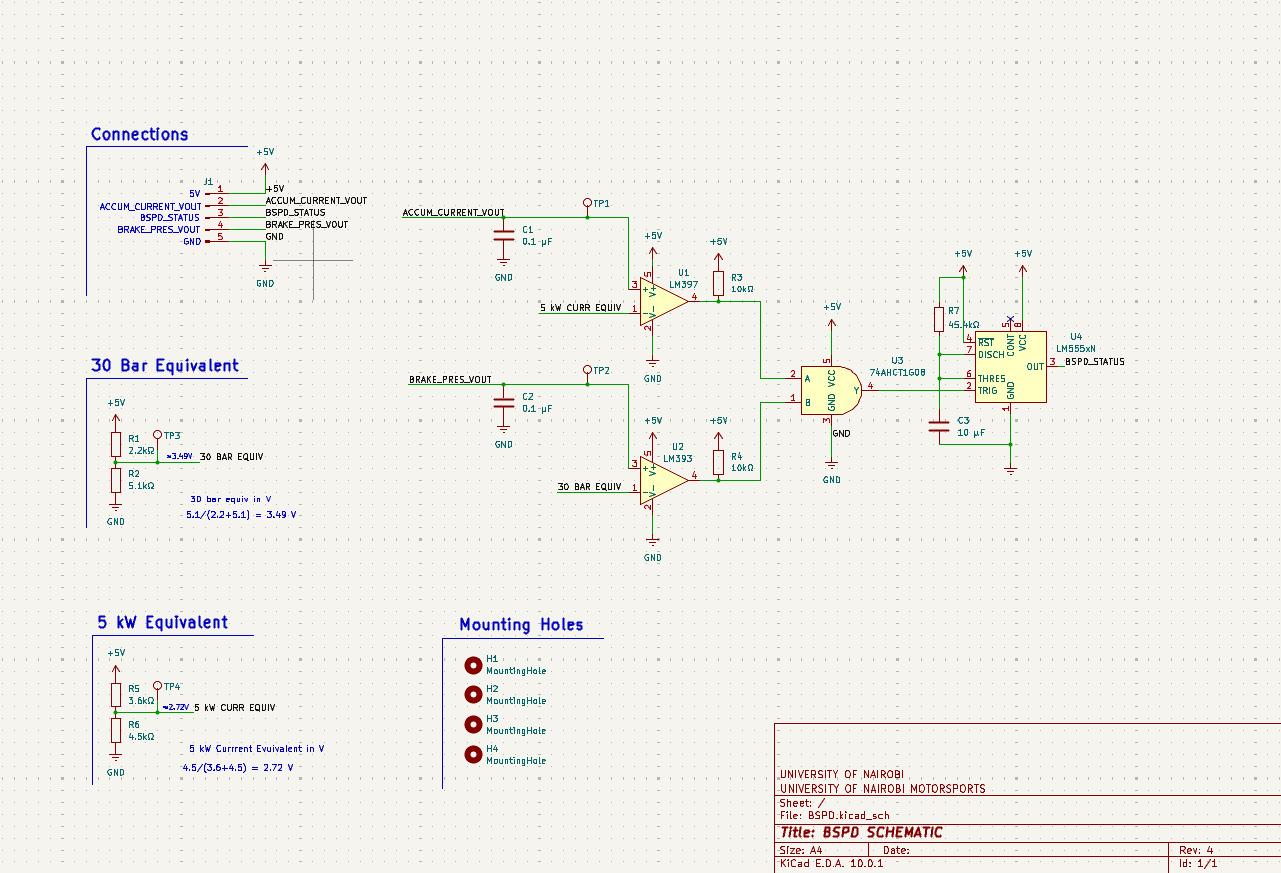
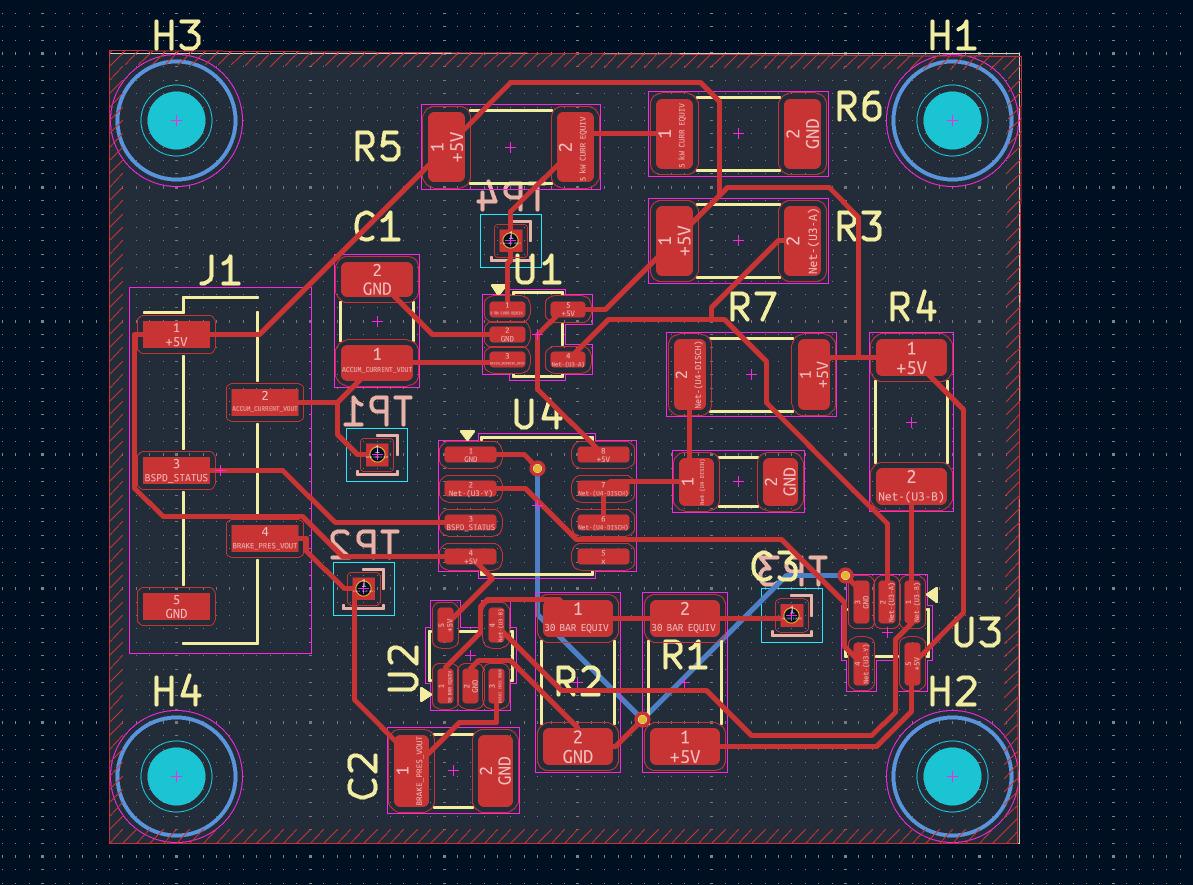
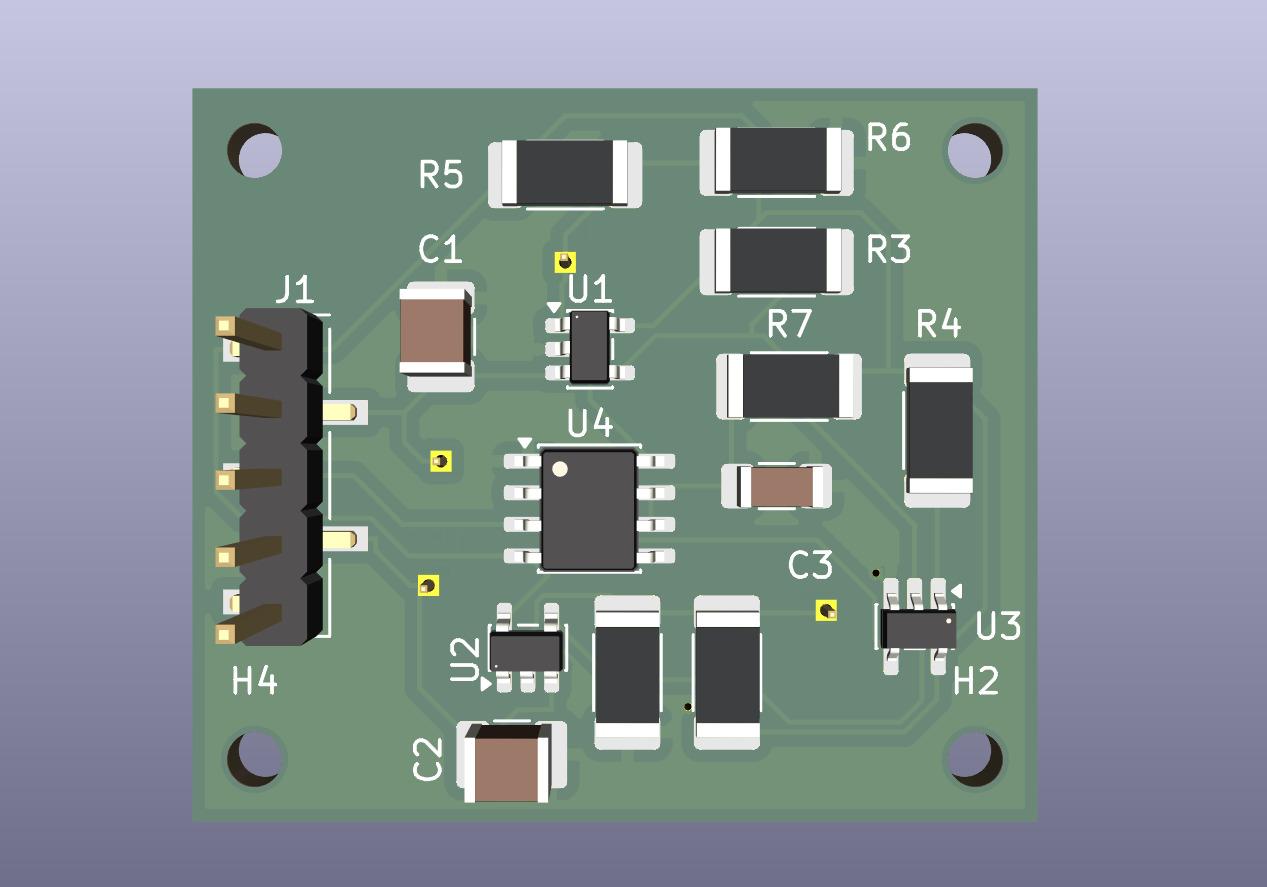
A rules-mandated safety circuit that opens the shutdown chain if hard braking and significant motor current are detected simultaneously — implemented in pure hardware, no software, as Formula Student rules require. Designed the schematic and PCB layout in KiCad.
SchematicPCB layout3D render
Results
7th place in Engineering Design at Formula Student UK 2026 — as a first-time competing team.
What I'd do differently
[ Placeholder — honest reflection: trade-offs, what you'd change with hindsight. ]